
One of the fun thing about trading options is the colorful and creative terminology of options trading.
The stock market may have Bears and Bulls, but the options market has Iron Condors, Iron Butterflies, Vertical Spreads, Calender spreads and a high stakes trade called a strangle.
Yes, indeed, these are real trading strategies with colorful names. One interesting term I wish to explain is Time Decay.
Time Decay is an option trading term and fortunately it doesn’t have anything to do with radioactive wastes or radioactive isotopes, whose time period of giving off radiation is called radioactive decay rate. :)
In options when an option Strike price is below the market price, it allows you to buy stock below the current price, but you pay a premium for that, close to the dollar difference between the option strike price and stock current price. That is called Intrinsic value. In addition to buying options with strike prices below the current price, you can buy options whose strike price is above the current market price. These options are bought by people who anticipate the stock price while rise and possibly rise above the strike price making these options valuable. But this means the Option has little value until that price rise happens and and it’s only value is the time it has until expiration. This value is called “Time Value”.
For example a Call option with a strike price 20 dollars above the current market value, with an expiration date 30 days into the future has 30 days of time value. In fact if you take the price of that option and divide it by 30 you get an approximate amount of the daily loss in value. This loss of value daily is called “decay” and more specifically “time decay”. This is why Call options are referred to as “decaying assets”. Which to an economist is a form of linguistic blasphemy as this kind of option is not an appreciating, it depreciating and it generates no income. So it doesn’t fulfill the normal criterion for an asset. It is instead better described as a derivative; paper which allows you to control assets which have value , but for a limited period of time. In addition a option is a time limited instrument, which expires potentially worthless in anywhere from 7 to 60 days.
Thus people who “invest” in call options above the current market value, are buying “paper”, which has a time limited existence, it’s only value is time until expiration.
An option decay curve looks like this:
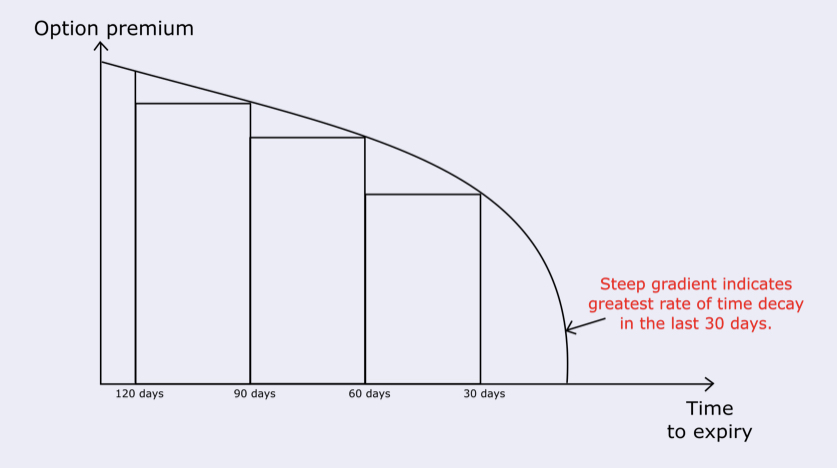
As you can see the curve gets steeper at the end and time decay actually accelerates with the Option losing more value per day as we get closer to expiration in the last week. These Call options which are far above the market price are referred to also as out-of-The-money or OTM. Another fun Option term which is a noun representing the daily amount of value lost is called “Theta”. Also referred to as an Option “Greek”, which refers to a Greek word used in modern option trading.
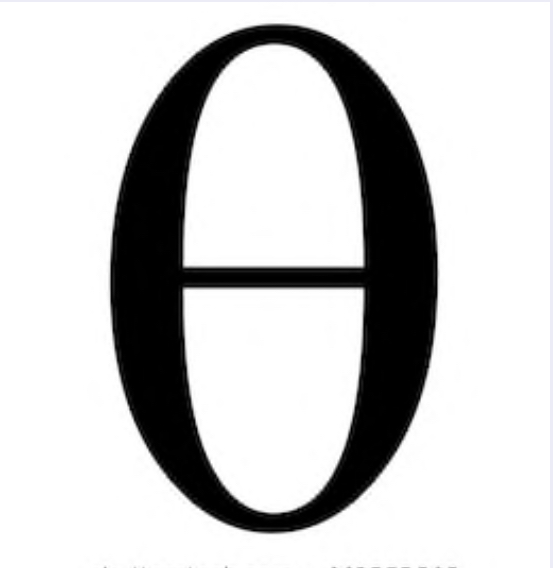
I think options trading is filled with creative terms like these and it’s part of what keeps it interesting.
Happy Trading!
✍️ written by Shortsegments
Read other articles by me on the Steemit Social Media Platform, where writers get paid for their content by the community by upvotes worth the cryptocurrency, called Steem.
Please follow my Steemleo investment Blog
Please follow my Twitter Feed Here

😅😊